In the first year of the Google News Initiative,
our efforts have centered around a spirit of experimentation, with
programs focused on three pillars: working with the news industry to
evolve their business models, raising up quality journalism and driving
new thinking and approaches in newsrooms. There’s still much to be done,
but we remain committed to collaborating with publishers to build a
stronger future for journalism.
Empowering sustainable business growth
The
business of journalism is undergoing a major transformation as the
focus expands from digital advertising to other ways of making money,
like subscriptions. Last year, we worked with publishers to design
Subscribe with Google (SwG) which makes it easy to subscribe and access
news publications across surfaces and devices.
Today,
nearly 50 partners from 19 countries have signed up to implement
Subscribe with Google and publishers like The Washington Post, the
Financial Times, Folha de S. Paulo and Nine Publishing are using the
product. Beyond subscriptions we’re expanding to support publishers who
monetize using contributions or membership-based models. The Guardian, a
leader in the field, is our first partner to test this approach and
will help to inform best practices before we fully launch later this
spring.
But technology is only one part of
the solution. Deeply understanding the needs of readers, building new
capabilities and adopting a subscriber-first culture require new
approaches and commitments from news publishers. Our new initiative
called the GNI Digital Subs Lab will help 14 publishers in North and Latin America transform their approach to digital subscriptions.
Elevating quality journalism
Every
day, people come to Google to access quality journalism, but not
everyone on the web acts with good intent. Combating misinformation
requires forging partnerships with industry organizations, investing in
better product solutions, and training journalists on the latest
verification tools and technology.
In the last year our News Lab
has trained nearly 300,000 journalists in person and online around the
world on digital tools for journalism, with a goal to reach 500,000
journalists by 2020. We’ve partnered with the International Fact Check Network
and dozens of newsrooms worldwide to quell the spread of
misinformation, especially during key times like elections. We’ve
supported initiatives like Verificado in Mexico, Comprova in Brazil, CekFakta in Indonesia, FactCheckEU and the journalist training network in India,
which included over 100 newsrooms and reached thousands of journalists
ahead of key elections—there’s more to come in Australia and Argentina.
We’re working with First Draft
on their CrossCheck tool, which helps journalists debunk and share
information across the world—they’ve already trained hundreds of
journalists ahead of the EU elections.
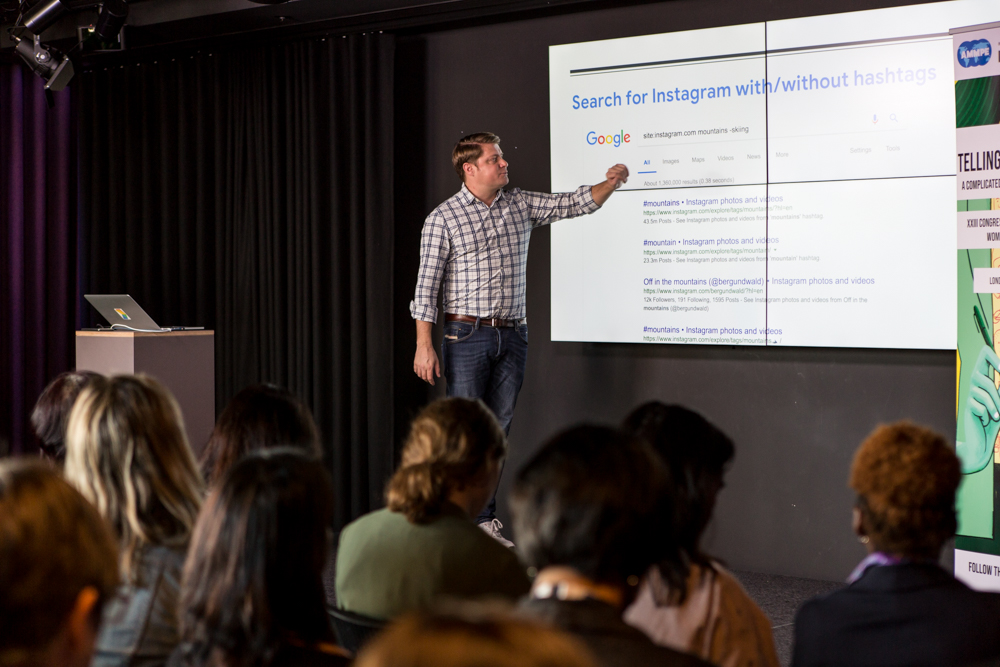
Journalists attending News Lab workshop at the Worldwide Association of Women Journalists and Writers event in London
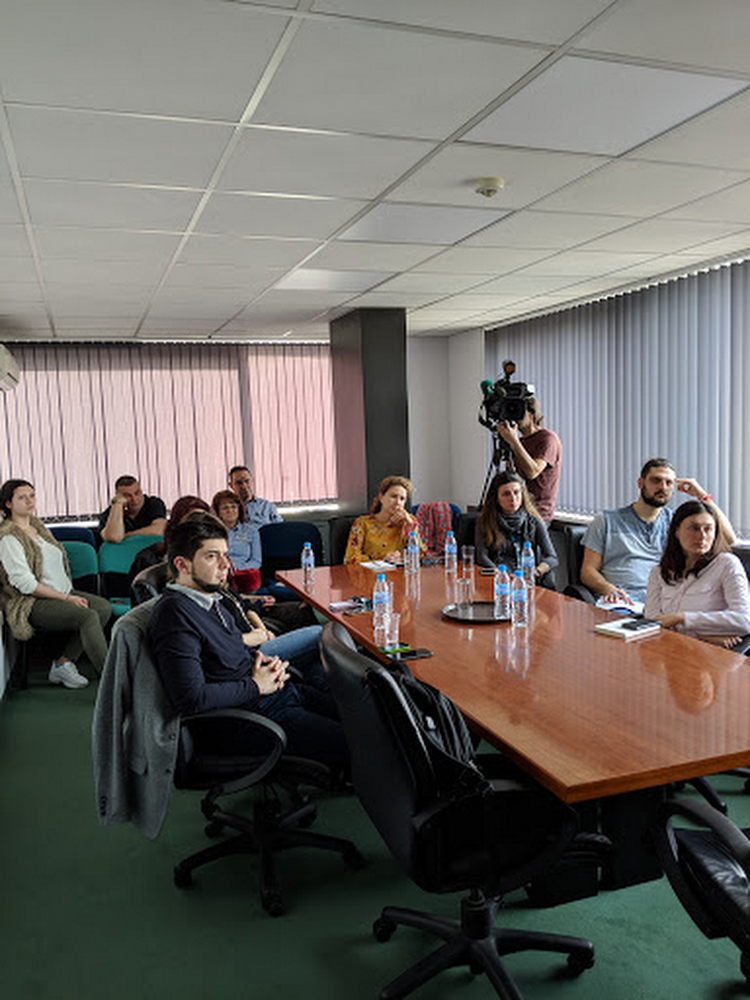
Journalists in Bulgaria taking part in a News Lab workshop.
Our fact checking project launched in October 2016
to help people find articles that fact check claims made on the web.
Earlier this month we unveiled a feature on YouTube in India that
automatically surfaces third-party fact checks from eligible publishers
alongside YouTube search results.
We’ll soon be launching two tools to help fact checkers work more efficiently and effectively. The Fact Check Markup tool makes it easy for reporters to put structured data markup into their fact checking content using the open standard ClaimReview, and the Fact Check Explorer
helps journalists find fact checking articles for various topics
through a simple search function. We’re also opening up APIs for these
tools to help developers build their own applications to assist fact
checkers across the world.
Beyond our products, we’re working to tackle the intentional spread of misinformation
across Search, News, YouTube and our advertising systems. In the coming
weeks we’ll launch a “How News Works” site, communicating the values
that shape our approach.
And to teach the next generation the difference between fact and fiction online we launched a $10 million global media literacy campaign with Google.org last year. In the U.S., MediaWise—led by the Poynter Institute—has trained 6,000 teens, launched a Teen Fact Check Network and partnered with YouTube creators like John Green and Destin Sandlin on digital literacy programming.
In
Europe we’re supporting Media Veritas to promote media literacy among
the most vulnerable communities in Portugal, Student View in the UK to
expand its school newsroom program and, in Finland, the Mannerheim Child Welfare Association to run 150 local events focused on digital well being.
New technology for news organizations
To
help news organizations around the world experiment with new formats,
we’ve given more than $5 million in audio innovation grants and launched
a $25 million program with YouTube that funded 87 publishers to develop sustainable video operations.
The GNI Cloud program,
aimed at small and midsize news organizations, has provided over 6,000
free GSuite licenses and around $1 million in Google Cloud Credits to
almost 100 publishers worldwide. Today we’re expanding the program to
train 14 news organizations—including Clarín in Argentina and Nikkei in
Japan—in machine learning to develop use cases around personalization
and content tagging that may ultimately become real products. Newspack
is a partnership with Automattic and Wordpress.com to build a fast,
secure, low-cost publishing system tailor-made to the needs of small and
medium-sized newsrooms. Next week the publications selected for phase
one of the program will be unveiled.
This is just a snapshot
of our efforts to build a healthy future for journalism—a vision that
would not be possible without the collaboration and partnership of
publishers from across the world.
Posted in:
Share this post
0 Response to "The Google News Initiative, one year in"


0 Response to "The Google News Initiative, one year in"
Posting Komentar